how to rise the best Hyper-Niche Blogging
When it comes to starting a blog, one of the most common questions people undoubtedly ask is how to pick a blog niche or what is the best blog niche out there?

I've seen this type of question pop up on forums countless times, and I've even gotten a few emails asking for advice over the past 2 years.
Now, I will say there is no cookie-cutter method for choosing a blog niche. However, this is probably the most important part in starting a blog, and there are quite a few things to consider.
So, this post is going to tackle the topic of how to choose a blog niche, as well as some blog niche ideas for 2020 to help inspire you.
Want other fast and easy money-makers? Checkout:
HeyCash: Unlock exciting rewards by playing games and sharing your opinion!
Surveoo: Earn cash today by sharing your opinion – payouts as high as $20 per survey!
What Is A Blog Niche? – Why You Need To Pick One
A niche is defined as a “distinct section of a market.” In terms of blogging, a niche is basically the topics you decide to write about on your blog.
Picking a blog niche is a frequently discussed topic because it sets the entire outline for the future of your blog. Plus, there are a number of things to consider when making this decision.
Bloggers often talk about the concept of “niching down” when deciding to start a blog. There are two main reasons why this is very valuable advice:
Scaleability – As a single person operation, it's unlikely you'll be able to cover multiple niches with your writing in a timely manner. In other words, if you write about multiple topics, your blog will have very skeletal categories for a long time.
Readability – It is very difficult to build a readership that shares the exact same interests as you if you write about a wide range of topics. Choosing a blog niche helps narrow your focus and attract a specific audience more easily.
So, that, in a nutshell, is why it's a good idea to pick a blog niche.
Time to break down some other important considerations.
How To Choose A Blog Niche – 7 Important Questions
Before selecting a niche and launching your blog, there are 7 questions I suggest spending some time on.
Write out the answers if you need, and take a few days to think things over. Don't be afraid to ask people for their advice as well or to leave a comment on this post!
If you're already prepared to launch your blog, you can also checkout SiteGround's affordable hosting plans to get the ball rolling!
1. Are You An Authority (Or Can You Become ONe?)
A lot of people think the most important aspect about choosing your blogging niche is if you love the subject or not.
This is a factor, but, it's actually not the most important one.
Undoubtedly, the most important factor in picking a niche for your blog is if you are an authority or not (or if you can become one).
Here's the thing: Google, the absolute best source of blogging traffic out there, gets more competitive every single day.
Additionally, author authority is one of Google's most important ranking factors.
Google uses EAT, or Expertise, Authoritativeness, and Trust, in their ranking algorithm. If you aren't an authority, it will inevitably be harder to rank on Google with your blog posts.
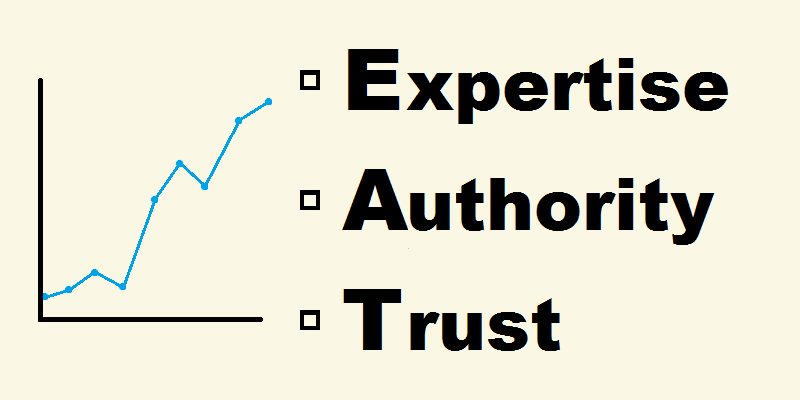
If you think about it, this is absolutely fair. After all, you wouldn't want to search for health advice and find content on the first page of Google that isn't authoritative.
Now, you don't necessarily have to be an authority before starting your blog or picking a blog niche. This is because you can become an authority in your topic over time (depending on your niche)
For me, a major turning point in getting my blog off the ground was having my phone farming guide rank #1 on Google.
Personal finance is a very competitive niche. However, by actually buying phones and running a phone farm during my time in college (and publishing honest income reports), I became an authority in that field.
Google rewarded me, I got dozens of free backlinks from people mentioning that post, and my overall authority in the whole “passive income apps” world grew as well. I now rank well for quite a few app related posts.
2. Is It A YMYL Topic?
Part of Google's EAT algorithm update (which rocked WebMonkey way back when) is heavily related to YMYL.
YMYL, or “Your Money, Your Life” refers to topics that can have a direct impact on your happiness, health, safety, or finances if information is not accurate.
Google takes YMYL content very seriously, and this is again why authority matters so much.
Here's what Google has to say specifically about YMYL websites:
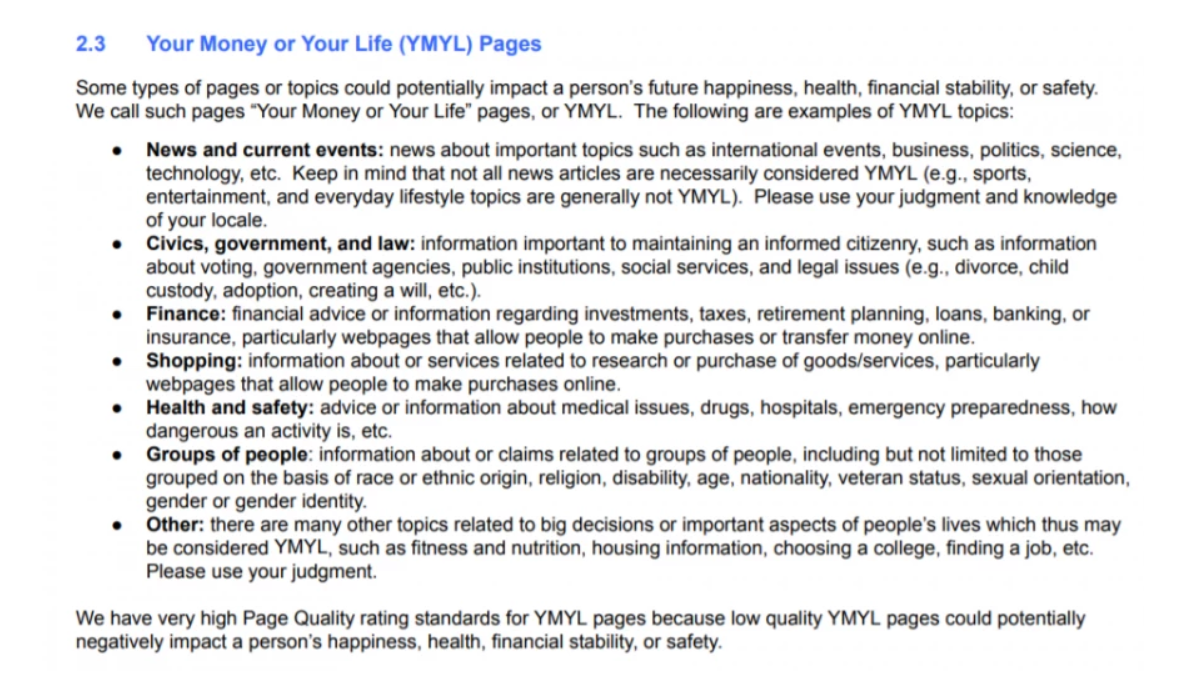
Now, don't let this page on YMYL guideliens scare you.
But, consider it in great detail before picking a blog niche.
It is possible to write in a YMYL niche and find success if you stick to what you're an expert in.
Again, this is a personal finance blog, but I stick to passive income ideas and side hustles, not topics I'm not qualified to talk about (like investing or retirement planning).
The only one I'd really caution you against here is health.
Unless you're a doctor or certified dietitian, I wouldn't touch the health blogging niche with a 10 foot pole.
Niching down to something like yoga or personal training would work if you're qualified, but again, be cautious here and figure out if your blog niche idea is considered YMYL.

3. Would You Write About Your Blog Niche For Free?
Most bloggers don't make significant income from their blog.
In fact, about 50% make between $0 and $200 according to a blogger survey from Digital Nomad Wannabe.
This was definitely the case for me as well. It took roughly 6 months to steadily earn more than $100 with WebMonkey, and 18 months to surpass $500 per month.
I now make more than $1,000 per month from blogging, largely thanks to Mediavine, but there's no denying that the path to blogging revenue is a long one.
So, is blogging worth it?
It is, if you enjoy what you write about, work hard, and have patience.
Don't get caught up on how to choose a profitable blog niche or try to figure out which blogging niche has the most money on the table.
Would you write about it for free? Because, chances are, you will be writing for free for at least a few months! 😛
4. Can You Come Up With 50+ Blog Post Ideas?
A great way to validate your blog niche idea is to make a content map of 50 to 100 posts.
If you hit a brick wall 10 post ideas in, this might be a sign your blogging niche is too narrow.
In contrast, if you hit 100 blog post ideas, look at your list, and can't explain what the website is about within a second, your focus might be too broad.
Pick your overarching blog niche idea, and a few sub categories.
For example, I selected the finance niche, and then came up with some possible categories like making money online, saving money, and money apps.
5. Will It Be Relevant In 5-10 Years?
This isn't always an easy question to answer, but hopefully, the answer is painfully obvious to you either way.
Industries evolve all the time, and blogs can keep up for the most part.
But, if you choose to blog about a single company, website, or service (I've seen plenty of blogs dedicated to a single app or platform before), know that this is a risk.
Even the biggest companies can fail, and if your blog niche goes under, there isn't usually a way to pivot in time.
6. Is Your Monetization Strategy “All-In?”
This is a bit more of a sophisticated consideration, and you don't need to worry about it if you just blog for fun.
However, if you want to pick a profitable blog niche, this is an important question.
An “all-in” monetization strategy means using only one source/approach to make money with your blog.
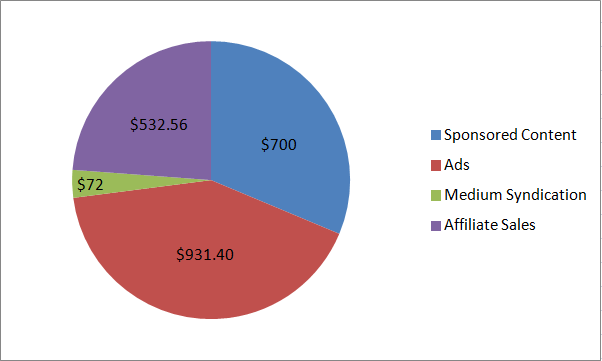
Amazon affiliate sites are a pretty common example of this strategy.
Similarly, I've seen plenty of blogs that are dedicated to a single type of affiliate offer or specific product. There's nothing wrong with this approach, but again, it limits flexibility and is a business risk.
Affiliate programs end or change rates all the time, and I personally don't like all-in approaches for making money with a blog niche.
So, when trying to find a profitable blog niche, consider exactly what options you have to actually generate revenue.
7. What Are Advertising RPMs Like?
Again, this is a higher-level consideration, but I think it's very important for anyone who wants to make money with blogging.
Ads are an awesome way to monetize your website. However, not all niches are created equal in this regard.
Your blogging niche has a direct impact on your ad RPMs. In other words, different blog niches are more profitable in terms of ads than others.
To get a rough idea of what to expect from your blog's niche RPMs, take a look at this advertising chart from WordStream:
Again, there are exceptions to these rules.
Furthermore, optimizing your ad unit placement or using a premium ad network like Monumetric or Mediavine will make a difference.
Things like seasonality of your blog niche will also impact your ad revenue, so keep this in mind.
Blogging about something you are an authority in should be the ultimate deciding factor when figuring out how to pick a blog niche. However, don't discount monetization viability.
Factors That Matter A Bit Less
There are a few other popular recommendations I've seen when it comes to picking a profitable blogging niche, as well as some other frequently asked questions on this topic.
In my opinion, the 7 questions I just listed at the most important. But, here are some other considerations that are worth thinking about.
What Is Keyword Volume Like?
I don't suggest spending weeks agonizing over keyword research and competition scores because paralysis by analysis is a real threat to getting your blog off the ground.
However, taking a quick peek at tools like Google Trends (to see if your blog niche idea is trending upwards) or keyword volume for post ideas isn't a bad call.
But, don't waste time looking at keyword volume for the most competitive or obvious topics in your niche.
Frankly, you probably won't rank for those posts for a very long time, and that's completely fine.
Rather, look up keyword volume and competition scores for your area of authority.
Here's what my search with Google Keyword Planner would have been back in the day since I started WebMonkey by writing about phone farms and passive income apps:

As you can see, this lets me identify 2 different potential post ideas (phone farming, and phone farming apps) that have 100-2,000 monthly searches and really low competition scores.
This is really all the proof of concept you need.
I had the experience to be an authority on phone farming, the keyword volume is good enough for a beginner blogger, and the competition is low.
The result?

Over 9,000 clicks, and this is just the last 16 months, so we're missing a decent chunk of time as well.
Plus, this post helped get WebMonkey off the ground and to obtain a tonne of backlinks.
Sure, I'll never rank on the best cash back credit cards or some other mega competitive term.
But, I can rank on content like this and then funnel users to higher-value posts or collect emails to do the same thing.
You get the idea.
Check keyword volume and competition for the area you want to be an expert in. Don't sweat the volume for the more competitive topics in your niche at the start.
What Is Google Doing?
Again, organic traffic is the life blood of many successful blogs. Therefore, it's a good idea to keep your ear to the ground for possible Google algorithm changes or policy updates.
I'll give you one subtle example that actually destroyed a lot of blogs in the celebrity entertainment niche or “net worth” tracking websites: featured snippets.
A lot of celebrity blogs used to drive a tonne of easy, organic traffic by tracking celebrity net worth.
Then, Google made their search engine look like this:

No one is clicking that link anymore because the featured snippet tells you everything you need to know to satisfy your search query.
This is Google's entire mission…they want to keep users on their search engine for as long as possible to make money with ads, and they also want to provide the best experience possible.
We're seeing changes to SERPs impacting other niches slowly but surely.
Travel is another prime example. Look at my search result for “things to do in Bucharest,” which gets nearly 7,000 searches a month:

Google is increasingly encroaching on the travel niche to push their own products.
This doesn't mean travel isn't a viable blogging niche idea, but keep these sorts of changes in mind.
For travel specifically, it seems like niching down to become an absolute authority is becoming more important since very generic posts are getting eaten up by Google.
Do You Want To Be Associated With Your Blog?
If you woke up and saw your blog and your face on national television together, would you be happy?
This sounds like a stupid question, but it's honestly something I struggled with for a while.
For the longest time, WebMonkey was anonymous and had a stock image for my author bio. However, in the sake of transparency and trying to boost my authority, I changed all that a while ago.
I wouldn't care if TOW got a lot of attention. But, if you blog about a touchy subject, give this one some thought.


Comments
Post a Comment